


Christmas dressing asks a lot of jewellery. You're moving between dinners, peoples’ homes, and outdoor evening events, often in the same outfit. And since a Malaysian Christmas is always guaranteed to be warm, you’ll have no reason to hide what you're wearing under a coat. Everything is visible, all the time. Which also means your brilliant diamond jewellery does more work unobstructed. Here more than it would anywhere else.
Fortunately, diamonds handle that range well. They’ll work under dim restaurant lighting as well as flash photography. But the accessories you choose, and how you wear them, still matter.
Here's how to style your diamond jewellery this Christmas season.
Styling Your Diamond Jewellery For Christmas
Below, some practical areas to consider as you decide on the right diamond jewellery to wear this Christmas season, as well as some styling tips.
Match Your Diamonds to the Fabric
Every fabric either reflects light or absorbs it. That one characteristic should drive most of your Christmas-time jewellery decisions.
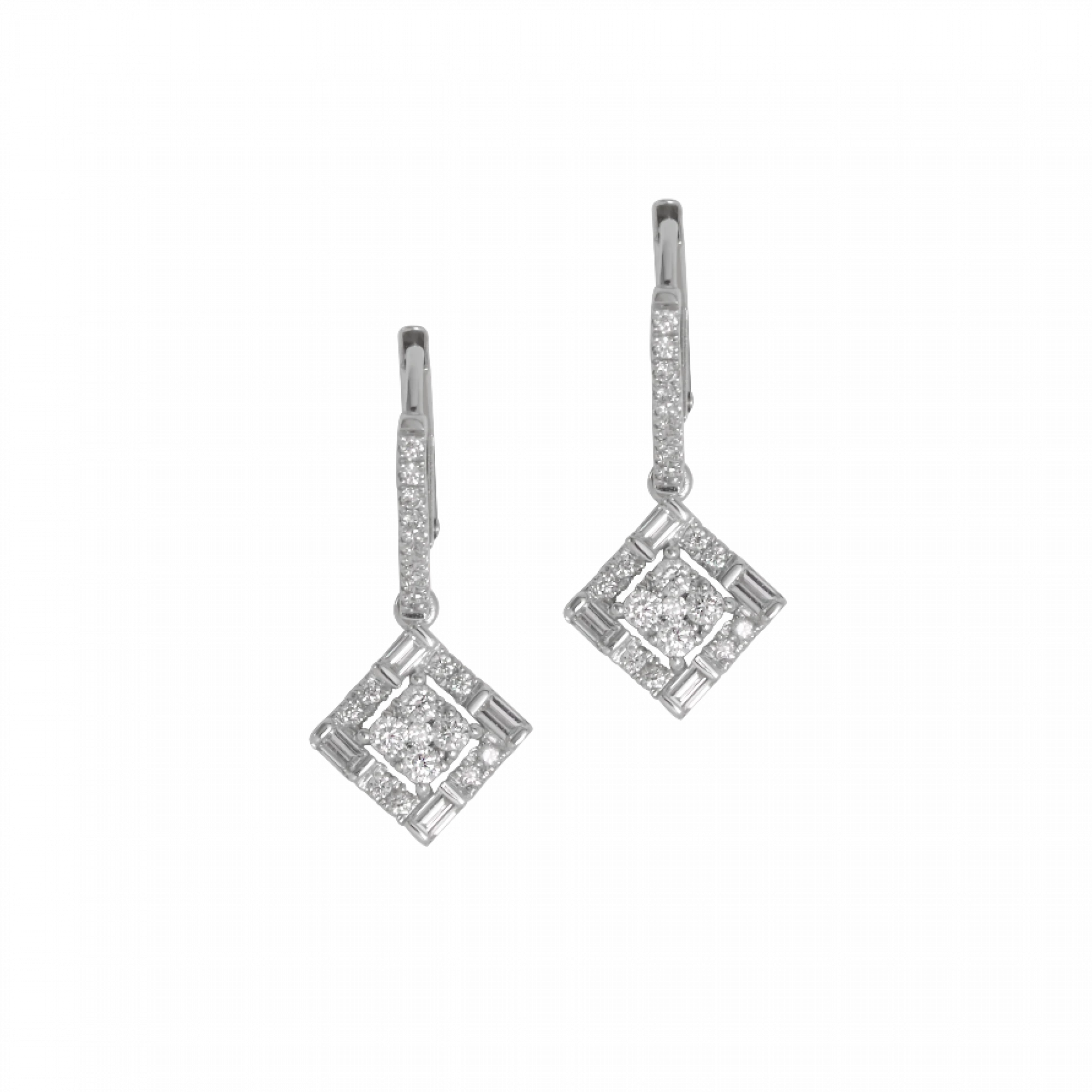
Matte, breathable fabrics like a linen or cotton top absorb light and create a rather flat visual. Pavé settings work well here. A pavé band or cluster drop earrings introduces multiple reflection points across a small area, so the jewellery becomes the only deliberate source of brilliance in the outfit.
Fabrics with natural sheen—your satin blouses, silk dresses—catch ambient light and create their own glow. A solitaire or emerald cut works better with these. One large stone gives a clean focal point. The step-cut facets of an emerald cut produce a hall-of-mirrors depth that complements the liquid movement of satin without making the overall look feel busy.
Heavier evening fabrics like velvet absorb roughly 95% of light. The fix is using diamond jewellery to redirect light back toward your face. A tennis necklace sits at collarbone height and catches overhead light at an angle, pulling brightness upward. Chandelier diamond earrings work by the same principle, particularly styles with pear-cut or marquise drops, which are elongated enough to catch light from multiple directions as they move.
Neckline Pairings
The neckline of your top determines the space available for jewellery. A deep V-neck for example creates a vertical channel that suits a drop pendant. On the other hand, crew necks compress the space, so jewellery needs to sit above the fabric (a collarbone-length pendant works great). Scoop necks work nicely with wider pendants to fill the open skin. Off-the-shoulder styles expose the neck and shift focus upward, so skipping the necklace entirely and going for chandelier earrings is usually the cleaner call.
Men wearing button shirts to Christmas dinner can keep it simple. A fine tennis chain below the collar, nothing excessive. With crew neck t-shirts, try a thicker chain with a diamond pendant. You want the chain long enough to sit over the fabric instead of tucking underneath. If you're in a suit and tie, your neck is already covered, so move the diamonds to your hands or wrists instead. A few of our favourite Christmas accessory ideas: a diamond signet ring, or a watch with a diamond bezel.
Colour Pairings
The 2026 festive palette leans dark. Burgundy, emerald, mocha. Colourless diamonds read clearly against these backgrounds. The coolness of the stone cuts through dark fabric without competing. A burgundy satin blouse with diamond studs and a tennis bracelet makes for a strong combination. A deep emerald wrap skirt with a single diamond pendant works just as well. White or nude fabrics work great with diamonds, too.
Where this falls apart is with sequined tops and busy prints (or other fabrics that carry a lot of visual information). Layering too much diamond jewellery on top may muddy both elements. With those pieces, keep it to a single understated piece, like small stud earrings and nothing else.
The general logic here is that the more a fabric is doing, the less your jewellery should. Solid colours can hold a lot of diamond jewellery. Patterned or textured fabrics ask for less.
Metals
The case for yellow gold diamond jewellery this Christmas is straightforward. Malaysian December means heat outside and aggressive air-conditioning inside. And to reflect that, whatever you're wearing is probably lightweight. Cotton, linen, silk, something sleeveless. Yellow gold against that kind of skin registers immediately. A thick yellow gold chain with a bezel-set diamond, for example, goes perfectly with a short-sleeve shirt for brunches or lunches.
White gold and platinum narrow the gap between a modest diamond and an impressive one. Both metals create a white frame that pushes visual attention toward the stone, making it appear larger. Platinum specifically is the denser material, which is why fine prong settings hold better in it over time. A platinum diamond tennis bracelet sitting against a rigid white shirt cuff is a highly reliable jewellery choice for any Christmas event.
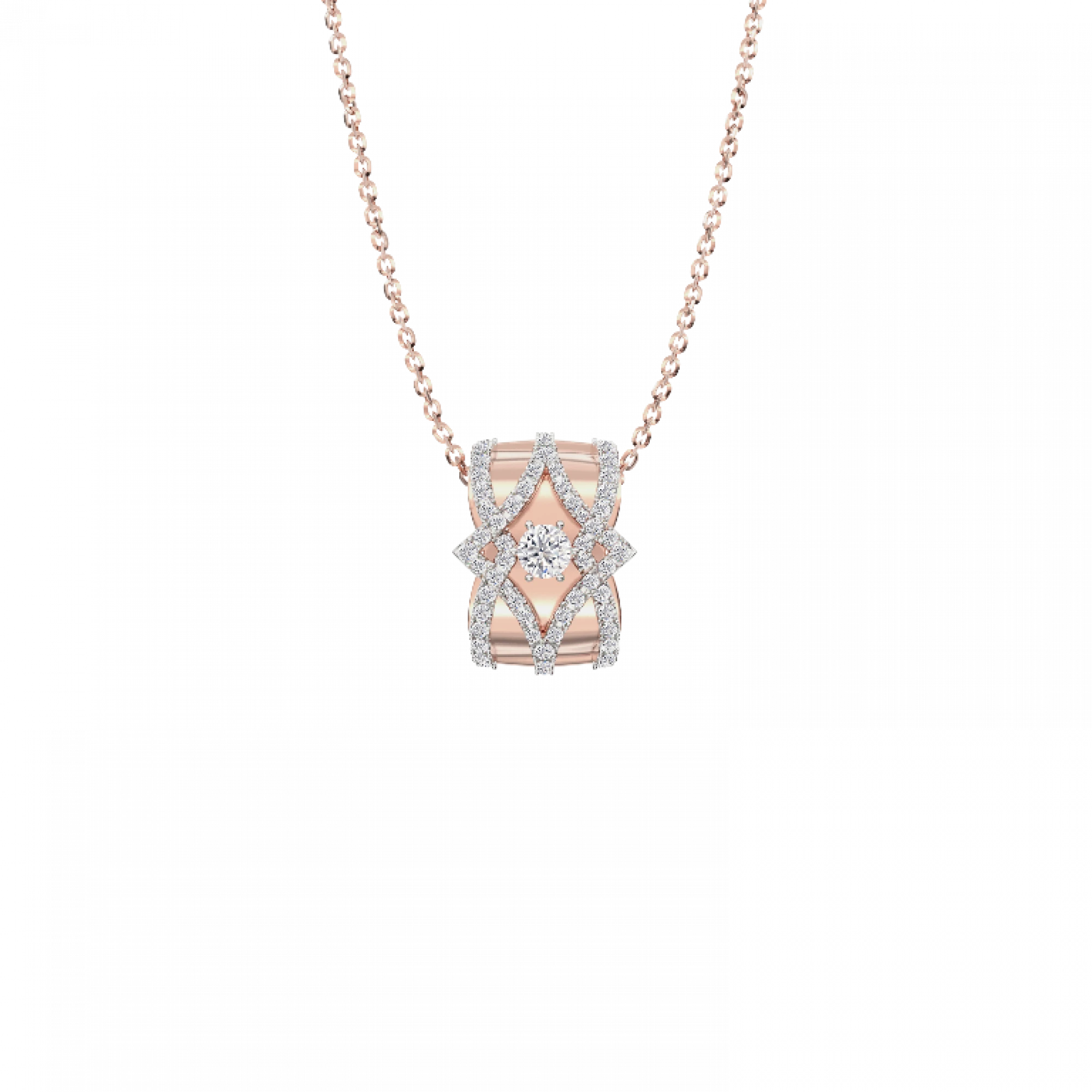
Rose gold reads softer than either. The copper in the alloy pulls it toward pink, which sits close to most skin tones. Under dim lighting it gets warmer still, which makes it the strongest option for evening events. Worth serious consideration as a romantic, christmasy jewellery gift for a partner.
Layering
Mixing metals used to break traditional styling rules. Now it just looks normal. You can easily pair a yellow gold chain with white gold diamond studs, for example.
To mix metals well on a single hand or finger, you just stack them deliberately. Put three rings on one finger. Two thin yellow gold bands flanking a white gold diamond ring is a straightforward formula that works. It looks intentional and breaks up the monotony of a uniform metal colour.
When layering what actually matters is diamond cut consistency. Learn to keep geometric families together. Angular with angular, soft with soft. Pair round cuts with other round cuts. A sharp princess cut diamond can easily clash with a round brilliant pendant if you’re not too careful.
For necklace layering specifically, the rule is graduated length. A choker or collarbone-length chain paired with a 45cm pendant gives each piece its own vertical space. Stack two pieces of similar length and they compete, tangle, and visually merge into one cluttered band across the throat. Three layers can work, but the silhouette needs to be clearly stepped, and the pieces themselves should stay simple. The moment you layer three necklaces and any one of them has a large pendant or cluster, the whole thing becomes heavy-looking.
Rings are the easiest accessory to layer. Thin diamond bands stack cleanly on a single finger without overwhelming the hand. Two or three stacking bands on one finger alongside a solitaire on another is a well-proportioned combination for Christmas events. Avoid spreading rings across every finger. One or two hands, a few fingers, and then stop.
Which Diamond Shape Is Right for You?
This is one question worth settling before you buy this Christmas.
Most people choose a diamond shape (or cut) based on what they've seen before. That's a reasonable starting point. But shape also determines how a stone works with light. Or how large it appears on the hand, as well as how much of its carat weight is shown. Here are a few popular cuts and their features.
The Round Brilliant Cut
The Round Brilliant is what most people picture when they think of a diamond. Its facet structure is engineered specifically for light return, capturing and scattering light back toward the eye in what gemmologists call scintillation. At a 1.0 length-to-width ratio, it sits neutrally on the hand, neither shortening nor lengthening the finger. For a Christmas diamond jewellery gift where you're not entirely sure of the recipient's taste, this is the safest choice.
The Oval Cut
The Oval has become the modern favourite in trending markets. It delivers brilliance comparable to the Round, with a length-to-width ratio of between 1.3 and 1.6 that helps create the visual illusion of slimmer fingers. It also covers more surface area than a Round of equivalent carat weight, so the stone reads larger.
The Emerald Cut
Where Brilliant cuts are all about flash, the Emerald cut goes after depth. Step-cut faceting produces long parallel reflections that descend into the stone rather than bouncing light outward (creating something called the hall of mirrors effect). The effect is quieter and more architectural. At a 1.4 to 1.6 ratio, it does lengthen the finger as well. The practical caveat: this cut is transparent in every sense. Inclusions have nowhere to hide under step-cut faceting, so stone selection matters more with an Emerald than with any brilliant-cut shape. Budget accordingly.
The Pear Cut
Pear cuts are asymmetric by design. The teardrop silhouette combines the pointed tip of a Marquise with the rounded base of an Oval, and at a 1.5 to 1.75 ratio, it produces both a slimming and lengthening effect on the hand. And it photographs exceptionally well (a consideration that matters more now than it ever has, as we’re sure you’ll agree).
The Marquise Cut
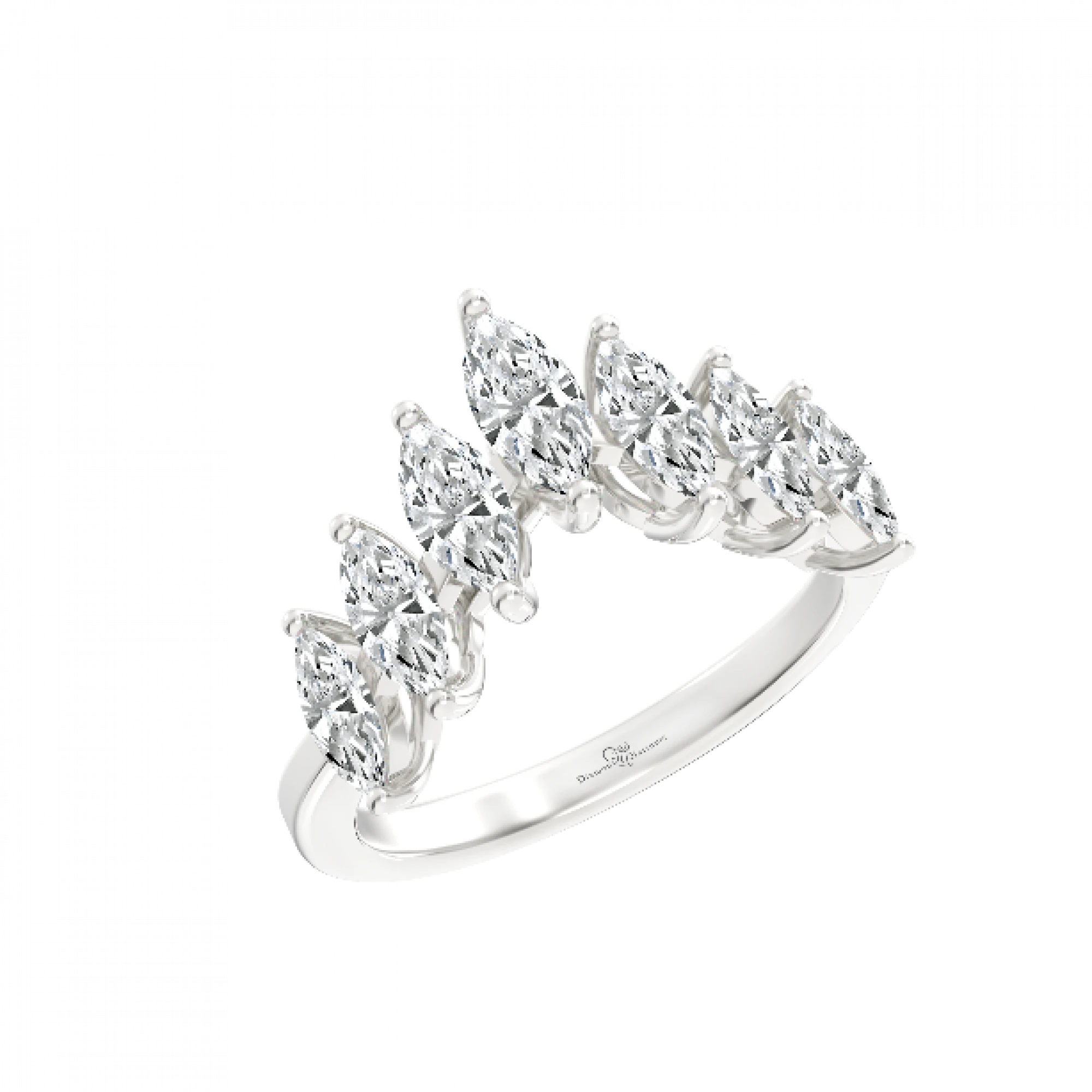
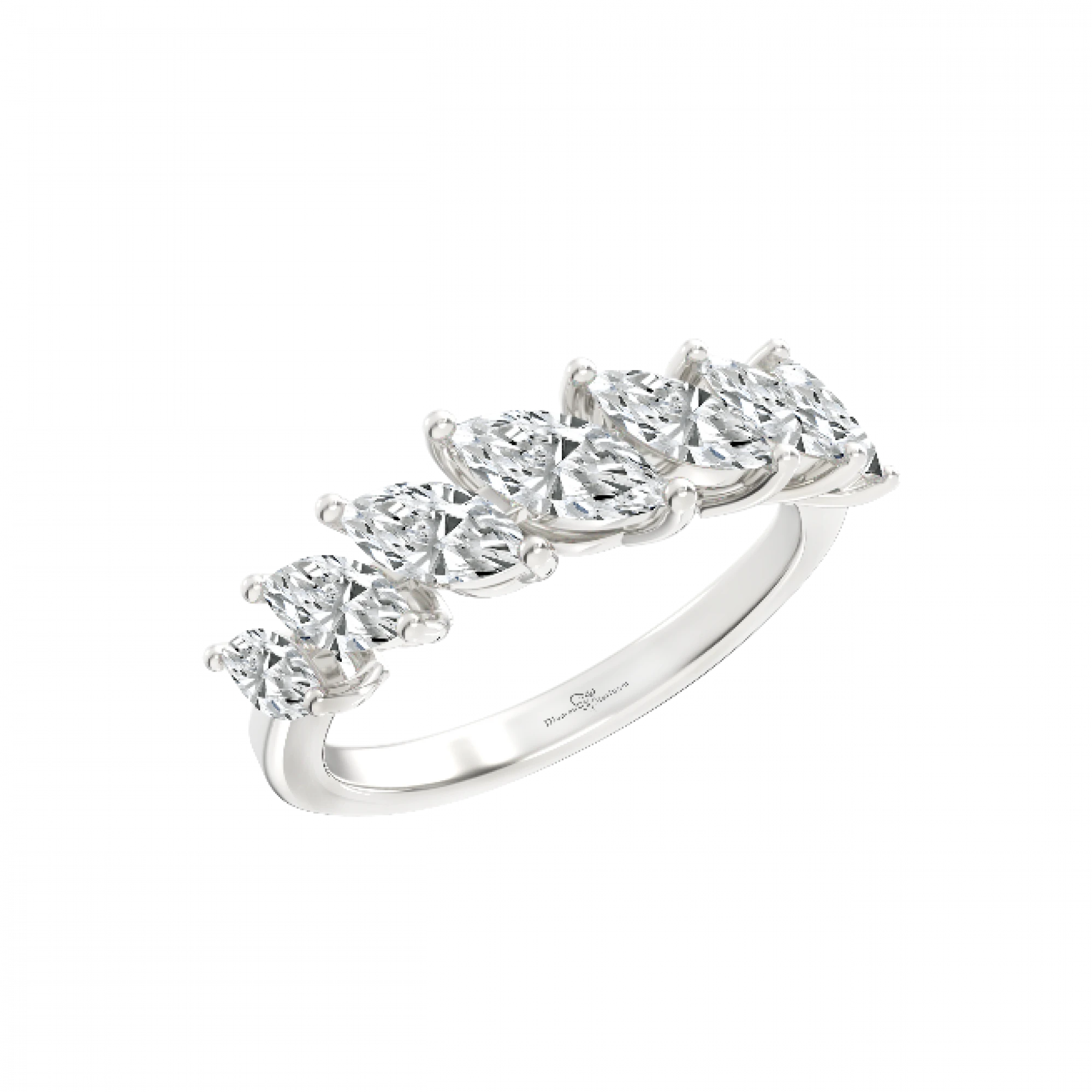
The most efficient cut by surface area per carat. The elongated pointed ellipse, running a 1.75 to 2.1 ratio, covers more finger than almost anything else at the same carat weight. A stone that reads considerably larger than its actual mass. For buyers managing budget against presence, this cut offers a genuine return.
The Cushion Cut
The Cushion has a warmth that suits Christmas specifically (our opinion). Square at a 1.0 ratio, it stretches toward a softer rectangular form at 1.2. What defines it across both proportions is the "crushed ice" effect, lending a diffused look which performs great under candlelight or warm ambient settings. Its vintage warmth appeals to wearers who find the high-contrast flash of a brilliant cut slightly too sharp.
In the end it’s true that no single cut outperforms the others in any absolute sense. They are each optimised differently, for difference preferences/use cases. Brilliance versus depth, drama versus softness, illusion of size versus clarity of light, and so on. The more useful question is rather more personal: whose hands, what neckline, and what kind of light will the piece actually live in this December.
A Note on Diamond Jewellery Care
Malaysia's climate is genuinely hard on fine jewellery. Heat and humidity push oils and sweat into the underside of stones where light enters. Most people notice the dullness but don't connect it to maintenance. Christmas is actually a good time to take stock and check. It’s worth making sure your diamond jewellery is clean before the occasion, rather than after.
Every few weeks, soak your diamonds in warm water with a drop of mild dish soap for 15–30 minutes, then brush gently with a soft-bristled brush. Rinse thoroughly. Then pat dry. Store pieces separately (in individual pouches if possible). Keep them away from harsh chemicals like chlorine or bleach.
And when you're cooking, exercising, or cleaning, take them off! Settings are sturdy, yes, but not unconditionally. The stone isn't going anywhere in daily wear. Rather, the accumulated small impacts, the leverage, the grip on a dumbbell or a wok handle, can quietly stress the prongs over time.
Conclusion
The best diamond jewellery for Christmas is chosen with some care beforehand. Shape against neckline, metal against skin tone, setting against occasion. Get those decisions right and the rest takes care of itself, across every dinner and gathering this December.
Diamond & Platinum carries the full range. Browse everyday diamond studs to statement pieces that complement the season. Shop online. Or walk into any of our boutiques across Malaysia. Our team can help you find exactly what you're looking for.